

Cybersecurity incidents continue rising at an alarming rate, with data breaches now costing organizations an average of $4.88 million, according to IBM's 2025 Cost of a Data Breach Report. This financial impact, combined with increasing regulatory requirements and stakeholder expectations, makes secure document management a critical business imperative.
A virtual data room has emerged as the gold standard for organizations that need to share sensitive information while maintaining stringent security and compliance controls during high-stakes transactions and governance processes.
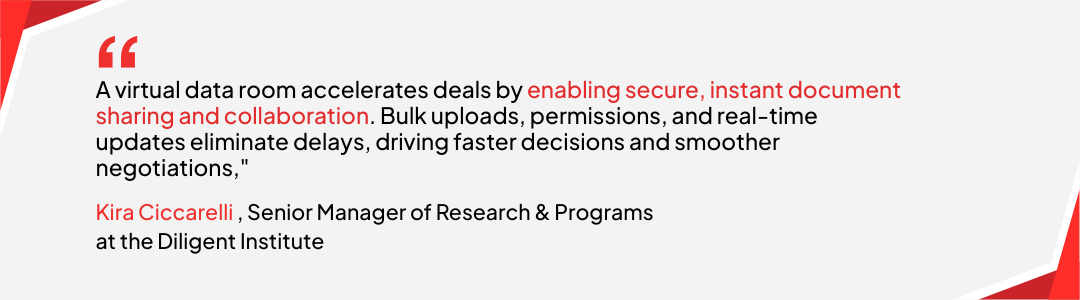
"A virtual data room offers advanced security, permissions, and audit trails that basic cloud storage can't match — ensuring that governance documents stay protected, compliant, and fully traceable," says Kira Ciccarelli, Senior Manager of Research and Programs at the Diligent Institute.
From multinational corporations managing complex mergers to growing companies preparing for IPOs, virtual data rooms enable secure collaboration without sacrificing operational efficiency or regulatory compliance.
In fact, 40% of directors identify M&A and strategic partnerships as a top priority for 2026, with 37% directing capital investments toward deal activity, according to the 2026 What Directors Think report from Corporate Board Member and Diligent Institute.
That volume of transaction activity demands a document infrastructure built for security, speed and stakeholder coordination. This comprehensive guide covers everything you need to know about virtual data rooms for secure business collaboration:
A virtual data room (VDR) is a secure, cloud-based platform designed for storing, managing, and sharing confidential documents during sensitive business processes. Unlike basic file-sharing services or standard cloud storage solutions, VDRs provide:
The concept of VDRs originated from physical data rooms — secure spaces where companies stored confidential documents for potential buyers, investors, or auditors to review during due diligence processes. These physical rooms required stakeholders to travel to specific locations, schedule appointments, and review documents under supervised conditions.
The digital transformation of data rooms began in the late 1990s and accelerated rapidly as internet connectivity and cloud computing matured. Today's virtual data rooms retain the security and control principles of their physical predecessors while adding collaboration capabilities, global accessibility, and real-time analytics that physical rooms could never provide.
While both VDRs and cloud storage platforms provide document sharing capabilities, they serve fundamentally different purposes and provide vastly different security controls:
Organizations handling M&A transactions, board materials, regulatory submissions, or other sensitive business processes require the specialized security architecture, compliance capabilities, and audit controls that VDRs provide.
Basic cloud storage lacks the governance-grade features required for high-stakes business activities, where security failures can create regulatory exposure, legal liability, or competitive disadvantage.
As noted by the Markets and Markets Global Forecast, the global virtual data room market was valued at $2.1 billion in 2023 and is projected to grow to $5.6 billion by 2029, with a CAGR of 18.1%. This growth reflects increasing M&A activity, rising regulatory compliance requirements, and the shift toward remote work environments that demand secure digital collaboration tools.
Organizations across industries now rely on VDRs for activities ranging from board governance and regulatory reporting to intellectual property protection and crisis management. The technology has evolved from a niche tool for investment banking to an essential component of the infrastructure for any organization handling sensitive information.
Virtual data room security is the fundamental differentiator between enterprise-grade platforms and basic file-sharing solutions. Modern cybersecurity threats require comprehensive security architectures that protect against both external attacks and internal misuse.
Enterprise virtual data rooms implement military-grade security measures, including 256-bit AES encryption for data in transit and at rest, multi-factor authentication, and granular access controls that enable administrators to define precisely what each user can view, download, print, or share.
Advanced platforms provide dynamic watermarking that embeds user identification into viewed documents, preventing unauthorized screenshots or distribution. Geographic access restrictions limit platform usage to approved countries or regions, while device-specific controls prevent access from unmanaged devices.
Security extends beyond prevention to include detailed tracking and reporting of all user activities. Enterprise VDRs maintain immutable audit trails that record every document access, download attempt, time spent viewing materials, and user interaction with timestamp precision.
These audit capabilities prove essential for:
Organizations can demonstrate thorough due diligence, identify potential security risks, and maintain detailed records to meet compliance reporting requirements.
Leading virtual data room platforms maintain comprehensive compliance certifications, including SOC 2 Type II, ISO 27001, and industry-specific frameworks such as HIPAA for healthcare organizations or FedRAMP for government contractors.
These certifications require ongoing security audits, regular penetration testing, and adherence to strict operational controls to ensure the platform's security meets the highest industry standards. Organizations can rely on certified platforms to support their own compliance obligations while reducing security risks.
Virtual data rooms provide sophisticated capabilities that address both security requirements and operational efficiency needs.
Modern VDRs seamlessly integrate security into everyday workflows, ensuring robust protection without compromising usability. Rather than treating security as a separate layer, leading platforms embed encryption, access controls, and audit capabilities directly into document management, collaboration, and reporting functions.
This integrated approach means users benefit from enterprise-grade protection without additional complexity:
Organizations gain comprehensive security while maintaining the operational efficiency necessary for time-sensitive transactions.
Enterprise-grade VDRs support bulk document uploads, automated file organization, and intelligent version control that prevents confusion during collaborative processes. Advanced systems include AI-powered document classification, optical character recognition for scanned documents, and automated redaction to protect sensitive information while enabling broader document access.
Search functionality extends beyond basic keyword matching to include advanced search and sorting capabilities that help users quickly locate relevant information within large document repositories.
Granular permission controls enable administrators to define precisely what each user can see, download, print, or share. Time-limited access ensures that permissions automatically expire after specific dates, while role-based controls streamline permission management for large user groups.
Advanced platforms provide fence-view capabilities that prevent screen capture and printing, geographic access restrictions that limit usage to specific countries or regions, and device-specific controls that prevent access from unmanaged devices.
Modern VDRs include Q&A modules that enable secure communication between parties to a transaction, annotation tools for document markup, and real-time notification systems that keep stakeholders informed of important updates. These collaboration features maintain security while enabling the interactive communication necessary for complex business processes.
Comprehensive analytics provide insights into user behavior, document usage patterns, and due diligence progress. These reports help administrators identify bottlenecks, ensure comprehensive review processes, and demonstrate thorough due diligence to stakeholders and regulators.
Virtual data rooms deliver measurable advantages across security, operational efficiency, and business outcomes that extend far beyond basic document-sharing capabilities.
Unlike basic cloud storage solutions, virtual data rooms provide enterprise-grade security architectures specifically designed for sensitive business processes. Organizations benefit from comprehensive protection against data breaches, unauthorized access, and compliance violations through:
Risk management capabilities include real-time monitoring of user activity, automated alerts for suspicious behavior, and detailed reporting to enable proactive security management. These features enable organizations to identify potential threats before they escalate into incidents and to maintain comprehensive records for regulatory compliance.
Virtual data rooms streamline complex business processes by:
Organizations reduce transaction preparation time through automated document organization, bulk uploads, and real-time collaboration.
Integration capabilities connect VDRs with existing business systems, including identity management platforms, workflow tools, and communication systems. This integration eliminates context switching and reduces administrative burden while maintaining security controls across all connected systems.
Streamline M&A due diligence and board governance with Diligent’s secure collaboration capabilities.

Professional presentation standards and comprehensive security controls build stakeholder confidence during sensitive transactions and ongoing business relationships. External parties, including investors, auditors, and regulatory agencies, appreciate the transparency and control that enterprise VDR platforms provide.
Advanced analytics and reporting capabilities demonstrate thorough due diligence, comprehensive review, and professional governance standards that enhance organizational reputation and stakeholder trust.
Virtual data rooms typically deliver significant cost savings compared to physical data rooms, multiple point solutions, or inadequate security measures that result in compliance violations. Organizations avoid travel expenses, physical space costs, and the administrative overhead associated with manual document management processes.
Scalable pricing models and flexible deployment options ensure VDR solutions scale with organizational needs without requiring significant infrastructure investments or platform migrations.
Virtual data rooms serve diverse applications across industries, each requiring specific capabilities and security considerations.
Mergers and acquisitions transactions are the most common VDR use case, requiring secure document sharing among buyers, sellers, and their advisors. Due diligence processes typically involve thousands of documents, including:
A global aviation leasing company recently demonstrated the power of VDRs in complex asset transactions. Previously relying on third-party platforms that presented security risks and costly page-based licensing, the company needed a solution for sharing detailed documentation with potential investors while controlling what each party could access.
After implementing Diligent Virtual Data Rooms, the company achieved enhanced security through flexible permission management and customizable terms for different legal use cases. The intuitive interface enabled non-IT staff to manage virtual data rooms with minimal training, while comprehensive audit trails provided transparency into user access and actions.
The results were transformative: streamlined deal readiness processes, improved stakeholder coordination, and enhanced security for sensitive asset information. The platform's global accessibility proved robust even in challenging international locations, supporting the company's worldwide operations.
Companies preparing for public markets use VDRs to manage investor communications, regulatory filings, and due diligence materials. The controlled environment enables management teams to share sensitive financial projections and strategic plans with potential investors while maintaining confidentiality and regulatory compliance.
VDRs increasingly support ongoing governance activities beyond one-time transactions. Board members need secure access to meeting materials, strategic documents, and confidential communications while traveling or working remotely.
Organizations face unique challenges when sharing sensitive board materials with external parties. Board packs contain confidential financial projections, strategic initiatives, executive compensation details, and privileged legal communications that require the highest security standards. Traditional methods like email attachments or basic file-sharing create significant risks:
Email lacks granular access controls, comprehensive audit trails, and the ability to revoke access after distribution. Files remain in recipients' inboxes indefinitely, creating ongoing exposure even after board matters conclude.
Basic cloud storage does not provide sufficient security for board-level materials. These platforms lack the permission granularity, watermarking, and compliance certifications required by governance documents.
VDRs solve these challenges through capabilities specifically designed for board governance:
Time-limited access for external advisors: Grant temporary access to legal counsel, financial advisors, or consultants that automatically expires after board meetings or engagements conclude. This prevents ongoing exposure after advisory relationships end.
Document-level permissions and watermarking: Control precisely which materials each advisor can access, download, or print. Dynamic watermarking embeds advisor identification into viewed documents, preventing unauthorized sharing while maintaining accountability.
Secure external collaboration without email: Enable advisors to review materials, submit questions, and provide input through secure platform messaging rather than unencrypted email. This maintains privileged communications while creating comprehensive audit trails.
Comprehensive activity tracking: Monitor which advisors accessed specific documents, time spent reviewing materials, and download attempts. These audit trails demonstrate appropriate information controls to regulators and support governance best practices.
Integration with board management workflows: Leading platforms connect VDR capabilities with board meeting preparation, enabling governance teams to securely distribute materials to both directors and external advisors through unified workflows rather than managing separate systems.
Ridgeback Resources, a private petroleum and natural gas company, exemplifies this application. With headquarters in Alberta and international investors including Apollo Management and Blackstone, the company faced significant challenges in securing stakeholder communication.
The four-member board required a solution that could bridge geographic distances while maintaining confidentiality and regulatory compliance. Email-based file sharing lacked adequate security controls, while the global investor base demanded real-time access to company updates and board materials.
Implementing Diligent's solutions enabled secure board meeting materials distribution, virtual shareholder meetings, and encrypted communications with international stakeholders. The integrated approach eliminated the need for multiple software solutions while providing enterprise-grade security through strict encryption, authentication, and user permissions.
The results included dramatic time savings for board preparation (from hours to less than an hour for meeting materials), enhanced security for sensitive communications, and improved governance practices that supported the company's growth objectives. The platform's real-time collaboration capabilities proved essential during COVID-19 travel restrictions, enabling continued operations without sacrificing security or governance quality.
Regulatory examinations and legal proceedings require secure document production and controlled access for external parties. VDRs enable organizations to provide auditors and legal counsel with the necessary information while maintaining control over sensitive materials and creating comprehensive audit trails for regulatory compliance.
"Virtual data rooms strengthen accountability with secure document management, automated audit trails, and instant reporting — helping organizations meet regulations and show governance oversight," says Ciccarelli.
This accountability framework proves particularly valuable during regulatory examinations where organizations must demonstrate thorough documentation practices and comprehensive compliance management.
Commercial real estate deals involve complex documentation, including property records, environmental reports, financial analysis, and legal agreements. VDRs streamline the due diligence process while protecting confidential information about property valuations and investment strategies.
Financial institutions, healthcare organizations, and other regulated industries use VDRs to manage regulatory submissions and examinations. The controlled environment enables secure information sharing with regulatory agencies while maintaining detailed audit trails and access controls.
The VDR industry continues evolving rapidly, driven by technological advances and changing business requirements.
Artificial intelligence transforms traditional document management through automated classification, intelligent redaction, and predictive analytics. Machine learning algorithms can identify sensitive information across document types and flag potential compliance issues before they become problems.
Advanced AI capabilities include contract analysis that extracts key terms and identifies potential risks, sentiment analysis of Q&A communications, and predictive modeling that forecasts due diligence timelines based on historical data.
Zero-trust security architectures assume no inherent trust and verify every access request regardless of location or user credentials. Advanced threat detection systems monitor for unusual behavior patterns, while blockchain technology provides immutable audit trails and enhanced data integrity verification.
Emerging security features include biometric authentication, advanced encryption key management, and integration with enterprise security information and event management (SIEM) systems.
Modern VDRs increasingly integrate with complementary business tools, including e-signature platforms, project management systems, and communication tools. This convergence reduces context switching and creates seamless workflows that improve user experience while maintaining security controls.
Workflow automation capabilities include automated user provisioning, scheduled document expiration, and triggered notifications based on specific events or milestones.
International organizations require VDR platforms that support data localization requirements, cross-border privacy regulations, and jurisdiction-specific compliance frameworks. Advanced platforms provide multiple data center options, automated compliance reporting, and integration with regional regulatory systems.
Choosing the right VDR requires careful evaluation of technical capabilities, security features, and business requirements.
Avoid platforms that lack valid security certifications, offer insufficient audit capabilities, or impose restrictive usage limitations. Be cautious of vendors without established track records in your industry or transaction types.
Successful VDR implementation requires strategic planning, stakeholder alignment, and ongoing optimization. To this end, it’s advisable to keep an eye on the following best practices:
Building secure, compliant document sharing goes beyond basic file storage — it demands integrated technology that operationalizes governance principles into daily workflows. Organizations need solutions that automate security controls, provide real-time collaboration capabilities, and enable teams to focus on strategic transactions rather than administrative overhead.
Recognizing these challenges, the Diligent One Platform delivers:
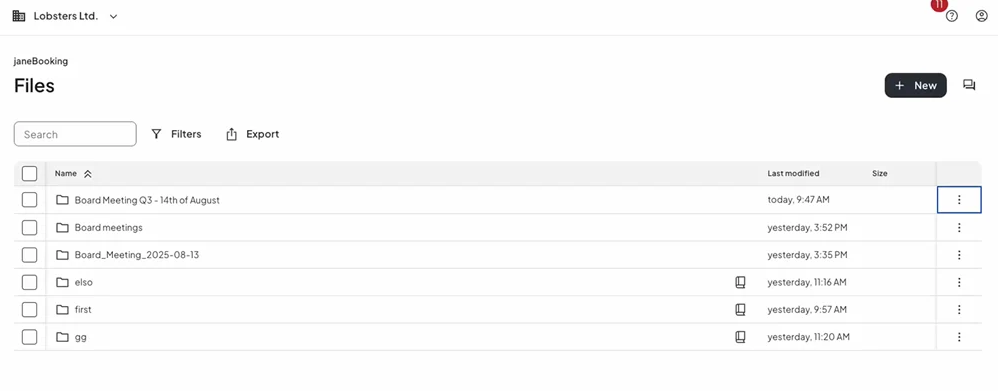
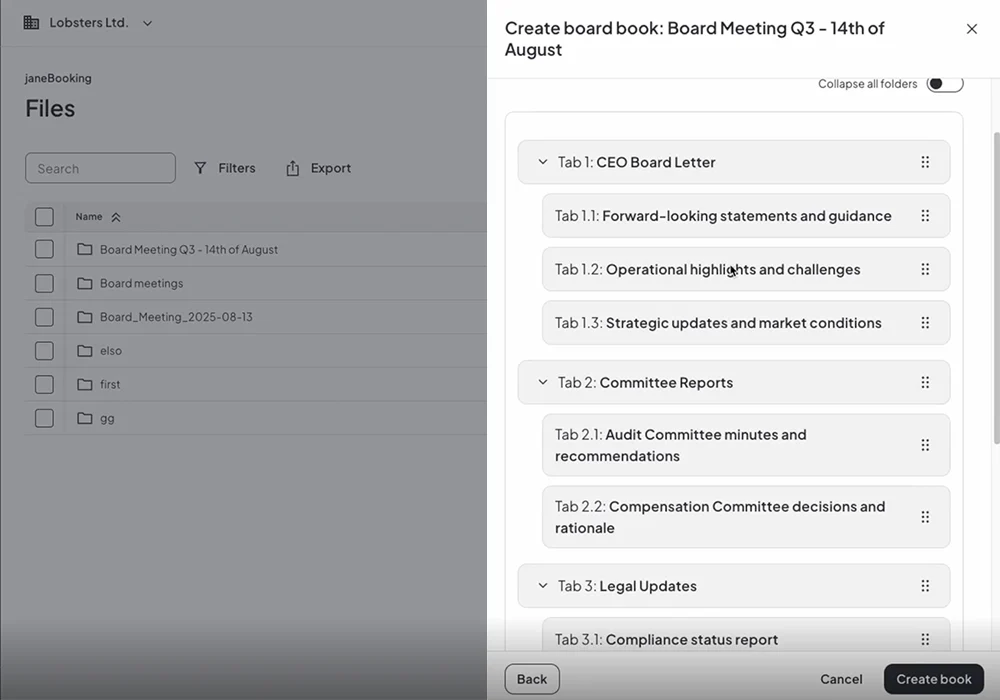
This integrated approach enables organizations to shift from fragmented, manual document management to strategic, secure collaboration that accelerates transactions while strengthening governance oversight.
Ready to transform your document security with enterprise-grade virtual data rooms? Schedule a demo to see how Diligent streamlines sensitive document sharing while maintaining comprehensive security and compliance.
Virtual data rooms provide enterprise-grade security controls, granular permission management, and comprehensive audit capabilities specifically designed for sensitive business processes. Unlike basic cloud storage, VDRs offer features such as dynamic watermarking, time-limited access, detailed user activity tracking, and compliance certifications for regulated industries.
The platforms also provide specialized workflow tools for due diligence, transaction management, and regulatory compliance that generic storage solutions cannot support.
Essential security features include 256-bit encryption for data in transit and at rest, multi-factor authentication, role-based access controls, and comprehensive audit trails. Compliance capabilities should include relevant industry certifications (SOC 2, ISO 27001, HIPAA), automated compliance reporting, data localization options for international requirements, and integration with enterprise security systems.
Common mistakes include inadequate planning for document organization, insufficient user training, overly complex permission structures, and failure to maintain ongoing security monitoring.
Organizations should avoid platforms that lack proper compliance certifications, fail to test disaster recovery procedures, and do not establish clear data retention and destruction policies. Additionally, rushing the implementation process without adequate stakeholder alignment often leads to user adoption challenges and operational inefficiencies.
Virtual data rooms support a range of transaction types, including M&A due diligence, IPO preparations, fundraising rounds, regulatory audits, and ongoing governance activities. Each transaction type benefits from specific VDR capabilities such as bulk document uploads for large due diligence processes, granular permissions for controlled investor access, or audit trails for regulatory compliance.
Ready to enhance your document security with enterprise-grade virtual data rooms? Schedule a demo to see Diligent's integrated governance platform in action.





